
Thought Leadership
Writing down what you genuinely observe about your market, in your own words, instead of repeating published news.
In plain English
Thought leadership is a grand label for a modest habit: saying what you actually see. Reporting that vacancy ticked up is news. Noting that three small industrial parks went vacant in one submarket, and explaining what that means for a tenant negotiating a renewal, is your observation.
The test is simple. Would the page still be worth reading if your name were removed? If it only restates a report someone else wrote, it is curation. If it adds what you learned from real conversations, it is yours.
Why it matters
- An owner reading your market note is judging how you think, which is part of what they are hiring.
- Observations written down are specific, checkable content a reader or a tool can repeat accurately.
- Restating published news adds little, since the prospect can read the same article themselves.
- A steady few notes serve you better than one dramatic statement, because the point is being current.
What to do next
- Write one short page this month about something you noticed in your own submarket and what you concluded.
- Say who it affects, such as landlords with expiring leases or tenants weighing relocation, and what they might do next.
- Back the observation with a source you can name, or say plainly that it comes from conversations.
- Keep the tone of a person explaining rather than an announcement.
Your next client is checking you out.
UpliftCRE puts your deals, listings and market knowledge on a website AI can read, with an AI staff that keeps it current in ten-minute meetings.
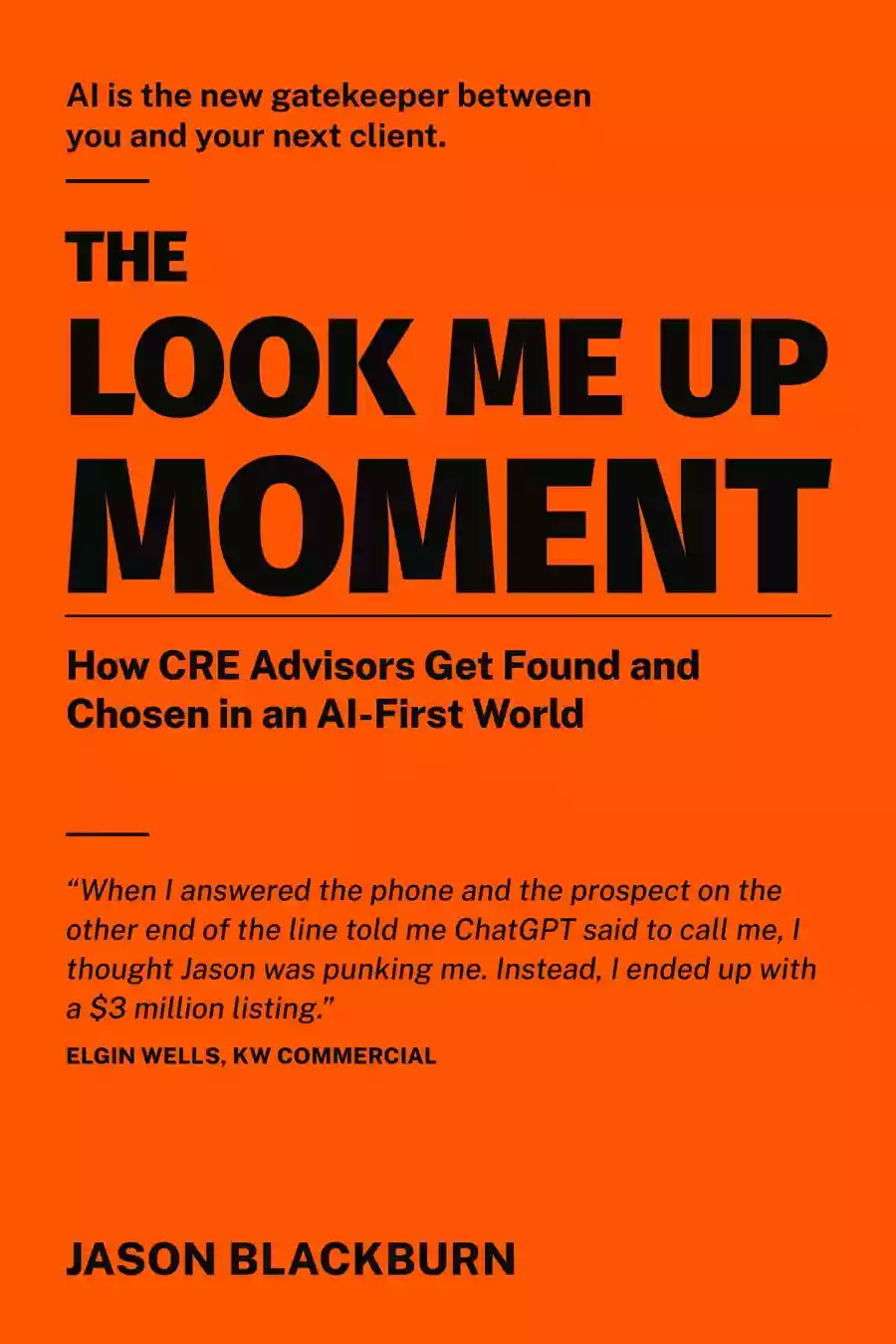
Read the book first.
Before UpliftCRE was software, it was a story. The Look-Me-Up Moment follows Jake Ellis, a broker four years in, as he builds a prospecting engine the hard way. Read it in one evening. Start the system Monday.