Social Proof
Evidence from other people, such as a dated deal record or real client words, that a reader can check.
In plain English
Social proof is the comfort a buyer gets from seeing that other people hired you and it went well. The honest version is checkable: a dated record naming the building, the town and which side you represented, plus real words from a client who agreed to be quoted. A reader can verify those, which is exactly why they carry weight.
The version to avoid is a collection of badges and impressive-sounding numbers. A logo wall for companies you met once, a strip naming a publication that ran your press release, and a headline about your own production all say less the more they are displayed. Specific work says plenty.
Why it matters
- High-stakes decisions make people look for evidence that someone else already took the risk.
- A record a reader can check does that work, while a claim about your own size cannot be checked and reads as promotion.
- Dated deal entries and real client words are the two forms that hold up when a prospect starts asking questions.
What to do next
- Add a dated entry for each recent closing, naming the property, the town and the side you represented.
- Ask a few clients for a short quote about a specific problem you solved together.
- Remove anything you cannot back up with a page a reader could go and look at.
- Keep the record current, since a record that stops in a past year reads like an advisor who stopped.
Your next client is checking you out.
UpliftCRE puts your deals, listings and market knowledge on a website AI can read, with an AI staff that keeps it current in ten-minute meetings.
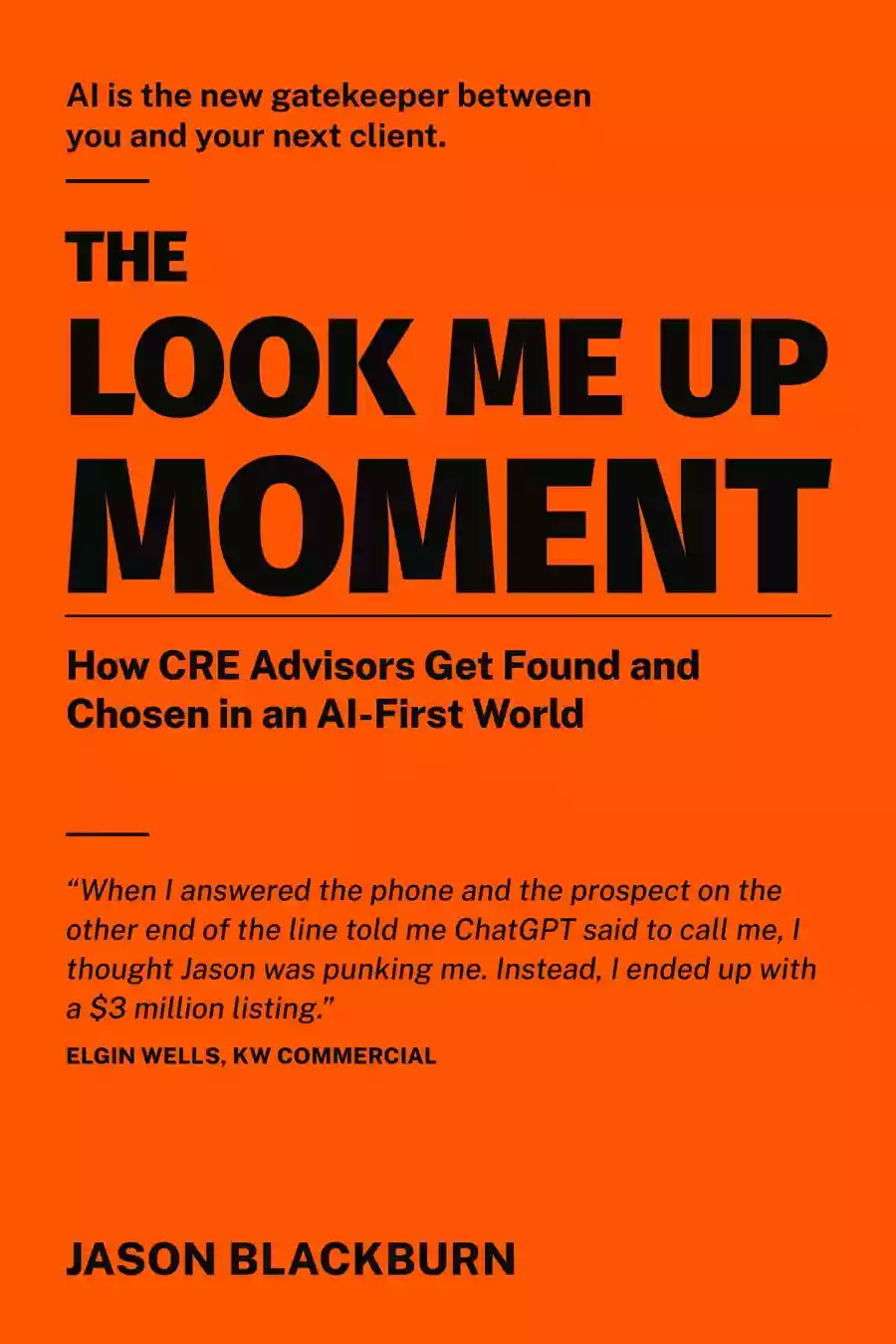
Read the book first.
Before UpliftCRE was software, it was a story. The Look-Me-Up Moment follows Jake Ellis, a broker four years in, as he builds a prospecting engine the hard way. Read it in one evening. Start the system Monday.