

TL;DR
- Every prospect checks you out before they call you back. It might be after a cold call, a letter, or a referral. It’s the same habit people have always had. What’s changed is where they look.
- More and more of them ask AI. They type your name into ChatGPT, Gemini or Google and read the answer. Many never click through to a website.
- AI can only repeat what it can find and check. If your deals, markets and track record aren’t written down somewhere it can read, it gives a thin answer. Or it offers someone else.
- You never hear about the call that didn’t come. That’s what makes this moment so expensive and so easy to ignore.
- The fix isn’t a trick. Put your real work on the record, in plain words, on a site you own, and keep it current.
The call you’ll never know you missed
You had a good first conversation. The owner of a three-tenant retail center listened, asked a couple of sharp questions, and said, “Let me think about it.”
Then they did what almost everyone does now. They looked you up.
Maybe they googled your name. Maybe they opened ChatGPT on their phone and typed, “Is [your name] a good commercial broker for retail in [your town]?”
What came back decided what happened next.
If they found your name tied to real deals (centers you’ve leased, the sides you represented, the towns you work), they called you back. If they found a headshot, a brokerage directory blurb and a LinkedIn profile from 2021, they kept looking. If AI said, “I couldn’t verify a track record for that advisor. Here are two I can,” the decision was made for you.
No voicemail. No “we went another direction.” Just silence.
That’s the look-me-up moment: the quiet checkpoint between a first conversation and a second one. It has always existed. It just used to be a phone call to a friend. Now it’s a search box and an AI answer.
Why this moment matters more than it used to
Commercial real estate has always run on trust. An owner selling a building, a tenant signing a ten-year lease, an investor placing a 1031 exchange: none of them hand that to a stranger. So they check.
Ten years ago, checking meant asking around. Today it means asking a machine. The machine doesn’t know you. It knows what it can read.
Three things changed at once:
1. People ask AI the questions they used to ask friends
Agents themselves have moved fast. In a February 2026 RPR survey of 225 agents, 92% said they use AI or plan to. The people who hire them are doing the same. When a prospect wants a second opinion on you, AI is often the first place they ask.
2. AI answers are shorter than search results
A Google results page shows ten links and lets the reader decide. An AI answer usually names two or three people and stops. If you’re not in those few names, you’re not in the conversation at all.
3. AI answers change, a lot
This part surprises most advisors. In our own research, we asked AI tools the same commercial real estate question over and over: who are the best brokers for this property type in this market? Only 2.5% of the time did an identical question return the same list of names (UpliftCRE CRE AI Visibility Pilot, 11,721 AI broker recommendations).
The answers are still forming. Nobody “owns” them yet. That’s bad news if you’re waiting for the dust to settle, and good news if you start now.
What AI actually looks for when someone asks about you
AI tools don’t rank advisors by who’s the best. They can’t know that. They rank by what they can find, connect and check. In plain terms, four things have to be true:
- There’s something to read. A real page about you, written in full sentences, that says who you are, where you work and what you do. A directory listing with two lines doesn’t count.
- It’s clearly you. Your name, your markets and your specialties line up in one place, so AI doesn’t confuse you with someone else who has the same name.
- There’s proof. Closed deals, listings, market reports, client stories. AI trusts evidence the way an owner does, more than adjectives like “experienced” or “trusted.”
- It’s current. A record that stopped in 2023 reads like an advisor who stopped in 2023.
Most advisors miss on all four. Not because they lack the experience, but because their experience lives in places AI can’t read: deal files, email threads, a brokerage system, and their own memory.
Where your track record goes to disappear
Here’s the uncomfortable part. You’ve done the work. The internet just didn’t keep it.
- Listings come down at close. The marketplace page that showed your listing for six months disappears the day it sells. The proof that you sold it goes with it.
- Press follows the firm, not the person. The announcement says the brokerage closed the deal. Your name, if it’s there at all, is in the last paragraph.
- Directory profiles all look the same. A headshot, a title and a phone number reads, to both people and machines, like every other agent in your market.
- Social posts scroll away. The post about your best deal last year is buried under three hundred others.
So when a prospect asks about you, AI has very little to work with. A thin answer isn’t an insult. It’s an accurate reflection of what you left on the record.
You don’t have to be a big name to win this
Most advisors assume the national firms win every AI answer. The data says otherwise.
In our Pilot study, the biggest national brands’ share of AI broker recommendations fell from 68.3% in the 20 biggest metro areas to 35.4% in smaller markets (metros ranked 51 and up). And CBRE, the best-known name in the business, didn’t hold the top spot every time in a single one of 237 market-and-property-type combinations we tested.
AI doesn’t reward the biggest logo. It rewards the clearest, most specific, most checkable record. An advisor who works the suburbs of Nashville and writes that down clearly can show up in answers where a national firm’s generic office page does not.
That’s not a promise that you’ll be named. Nobody can promise that. But it means the slot is open, and it’s winnable by someone with real local work and a record to show for it.
What “passing” the look-me-up moment looks like
Picture the same retail center owner, same “let me think about it.” This time, when they look you up, here’s what they find:
- A website with your name on it. It says plainly that you work retail and industrial in their county, and that you represent owners, landlords, tenants and buyers.
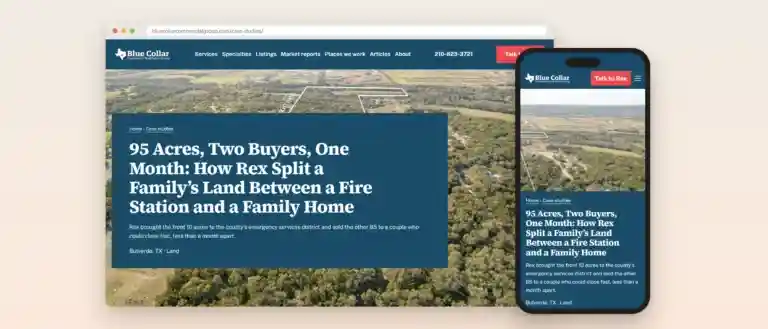
- A track record with dates. For example: “Leased 18,500 SF retail center, March 2026. Sold 6.2-acre land site, January 2026.” Each one has a short story: what the problem was, what you did, how it ended.
- Market pages for the towns you actually work, written in your words, with real local context.
- A recent market report or article that shows you’re paying attention right now, not three years ago.
And when they ask AI about you, the AI has something specific to say. It can describe what you do, where you do it, and point to proof.
Now the call back is easy. You’re not a stranger anymore. You’re the advisor whose work they’ve already seen.
How to start (with or without us)
You can do this yourself. It just takes discipline. Here’s the order we recommend:
Step 1: Look yourself up, the way a prospect would
Open ChatGPT, Gemini and Google. Ask each one, “Who is [your name], commercial real estate, [your town]?” Then ask, “Who are good commercial brokers for [your property type] in [your town]?” Write down what you see. That’s your starting line.
Step 2: Get one page that’s unmistakably you
One clear page on a domain you own: who you are, the property types you work, the towns you cover, and the client types you represent. Plain sentences, not buzzwords.
Step 3: Put your deals on the record
For every closing, write a short entry: the property, the town, your side of the deal, the month, and two or three sentences on what you solved. Do the last ten deals first. It’s the most valuable hour you’ll spend this quarter.
Step 4: Keep it moving
A new entry after each closing. A short market note each quarter. The record should look alive, because it is.
Step 5: Use it when you prospect
Send it. “Here’s the warehouse we leased outside Phoenix last month” is a better reason to call than “just checking in.” Your record is prospecting material, not just a reference page.
Where UpliftCRE fits
We built UpliftCRE because we had this problem ourselves. At Blue Collar Commercial Group, we put our track record online where AI could read it.
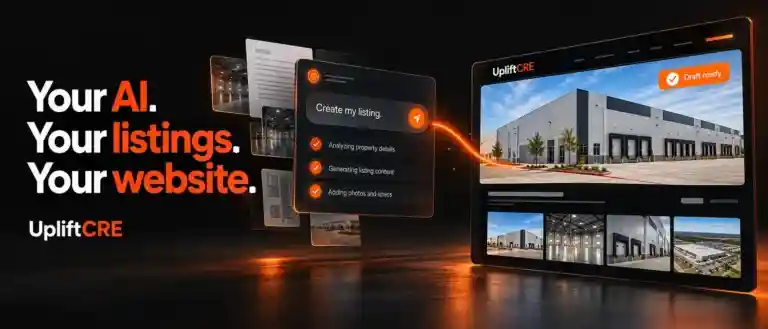
UpliftCRE gives you a commercial real estate website built so prospects and AI can read it, plus an AI staff that does the writing. Each task is a ten-minute meeting. You talk, or record a voice note. It drafts the case study, listing page or market report. You review each one before it publishes. On the Growth and Authority plans, Market Voice also publishes articles about your local market for you each week.
“When I answered the phone and the prospect told me ChatGPT said to call me, I thought Jason was punking me. Instead, I ended up with a $3 million listing.”
— Elgin Wells, KW Commercial, Houston Metro
One advisor’s experience, not a promise. But it’s the moment this whole article is about, going the right way.
Frequently asked questions
What is the look-me-up moment?
It’s the checkpoint between your first contact with a prospect and their decision to call you back. In that moment, they research you, more and more often by asking an AI tool. What they find shapes whether they call.
Do prospects really ask ChatGPT about commercial real estate advisors?
Many do, and the habit is growing. In a February 2026 RPR survey of 225 agents, 92% said they use AI or plan to. The people who hire agents are adopting the same tools. Google also shows AI-written summaries for some searches, though rarely for real estate so far.
Why does AI give a different answer every time I ask?
AI answers about local commercial brokers are still forming. In our Pilot study, only 2.5% of identical repeated questions returned the same list of names. That means no one owns these answers yet, and a clear, checkable record gives AI something solid to repeat.
Can I make AI recommend me?
No one can guarantee that, and you should be wary of anyone who says they can. What you can control is whether AI has accurate, specific, current information about you. That puts your name in the running.
Isn’t my brokerage profile enough?
Keep it, but it’s rarely enough on its own. Brokerage profiles tend to be short and look alike. They also don’t hold your full track record, and they live on someone else’s site. A record on a domain you own stays with you.
How long does it take to build a record AI can read?
A focused advisor can get the basics in place in a few weeks: one clear page plus their last ten deals. With UpliftCRE, our target is a site preview in three to five business days.
Glossary terms used in this article
- Look-me-up moment: The point where a prospect researches you before deciding whether to respond or call back.
- AI answer (AI search): A written response from a tool like ChatGPT, Gemini or Google’s AI summary, instead of a list of links.
- AI Overview: The AI-written summary Google sometimes shows above its regular search results.
- Track record: A dated list of the deals you’ve closed, with the property, the location and your side of the transaction.
- Case study: A short story of one deal: the problem, what you did and how it turned out.
- Owned domain: A website address that belongs to you, like yourname.com, rather than a profile on someone else’s site.
- 1031 exchange: A U.S. tax rule that lets an investor sell one investment property and buy another while deferring capital gains tax.
- Verifiable proof: Specific facts (dates, places, property types) that a person or an AI can check, as opposed to general claims like “experienced.”
Sources: RPR, Feb 2026 (agent AI adoption). UpliftCRE CRE AI Visibility Pilot: 11,721 AI broker recommendations across 4 AI tools, 79 metro areas and 3 property types.