
TL;DR
- Not every owner call is a listing. Treat it like one and you’ll lose the owner.
- Owners are checking your judgment, not your logo. Show how you think before you ask for the listing.
- Write for the brother-in-law. Your page will get forwarded to someone who wasn’t on the call.
- Say who does what. Your job, the owner’s decision, and the attorney’s or engineer’s part.
- A chatbot’s list isn’t a hiring decision. It changes almost every time someone asks.
Your business card is on the kitchen table
Picture the check after your first call. An owner outside Tulsa has your card beside a folder of property papers. A family member opens your website.
The owner wants help deciding what to do with a small commercial building. The site assumes the decision is already to sell.
Treating every owner call like a listing appointment is how you lose owners.
Owners can smell it. They call to think out loud, and the advisor’s website is already screaming “LIST WITH ME.” So they look somewhere else.
At Blue Collar Commercial Group, we learned that an owner who isn’t sure yet is still a great conversation. Our marketing has to show we’ll help them decide, not just ask for the sign.
Your biography might establish who you are. It cannot tell the owner whether you will listen before picking a destination.
The owner is checking judgment, not just credentials
Begin with the decision. Sale, lease, hold and gather more information are different possibilities.
Say an owner has a vacant retail building outside Boise. The fact that you handle sales does not settle whether a sale fits the owner’s plans. The fact that the property is vacant does not settle the owner’s timing.
Your site can explain the conversations you help with before marketing begins. Describe what you need to understand, what work you handle and when another professional belongs in the discussion.
That is how a broad practice becomes useful to the reader. The owner can recognize a question without being pushed into an answer.
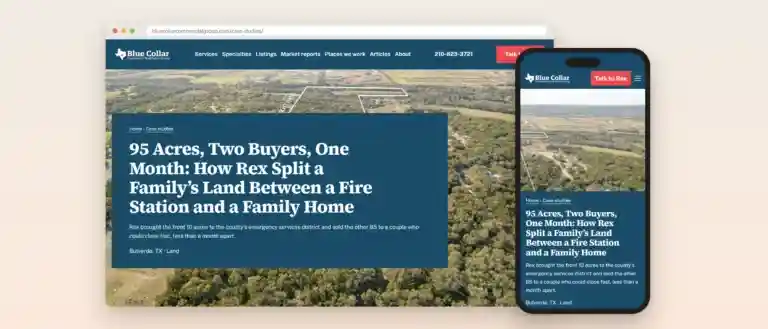
It also makes your experience easier to assess. A permitted case study can show how you helped a past owner examine a decision, including a result other than immediate marketing.
Do not make indecision the villain. A building can be tied to a business, a family plan or obligations you have not seen. The owner is entitled to have facts before choosing a direction.
Show how you get ready to advise on the actual property.
An owner should be able to understand what information matters and why you ask for it. Existing leases, property details and the owner’s plans may all shape the conversation.
Explain the purpose without turning the page into a demand for documents. A person who has not hired you may only need to know what to gather before meeting.
Distinguish initial information from conclusions that need more work. A preliminary conversation is not the same thing as a complete property review.
Experience should explain a decision the owner recognizes
Explain the situation behind past work.
An owner may care that you have handled a comparable property. They may also care about a similar decision, such as sorting out information before marketing or coordinating parties with different priorities.
A case study is a short account of a challenge, your approach and the result. It can make those connections visible.
Do not imply that similar facts produce the same outcome. Explain what the assignment demonstrates and what would need examining about the owner’s property.
You do not need to narrow the entire practice to make an example relevant. Work across property types can show useful judgment if the connection is described honestly.
Make roles clear enough that the reader can ask informed questions.
Explain the work you perform, the decisions the client makes and the help that may come from other professionals. Do not let broad service language blur those boundaries.
If you coordinate information from an engineer or attorney, describe the coordination. Do not present the other professional’s opinion as your own conclusion.
A prospective client may also want to know who on your team will be involved. Explain that accurately where it is known, rather than letting a prominent name imply personal handling of every task.
Handle other clients’ stories with the care a new owner would expect for their own.
A public account should contain information you are allowed to share. Private circumstances, negotiations and disagreements are not necessary merely because they would make the story more dramatic.
Describe the challenge at an appropriate level. Credit the client’s decisions respectfully. Avoid making the owner in the case study look foolish so that the advisor looks impressive.
If a name or photograph needs permission, get it before publishing. If an account needs to stay private, keep it private.
The family member needs a page that travels
Your original contact may share the link with a sibling, business partner or accountant. Write for the person who was not on the call.
An unexplained service list is hard to discuss. A plain account of preparation gives the group something useful to examine.
Explain lease rollover when you use the phrase: the point when an existing lease ends or needs a new agreement. Explain why it matters to this kind of decision. Don’t leave the family member to translate industry shorthand after dinner.
Make responsibility equally plain. Say what the advisor does, what the owner decides and what needs confirmation from another professional.
A prominent name at the top should not imply that person personally performs every task. At our firm, my marketing work and the team’s property work need to remain distinct.
The page should preserve those distinctions without a phone call to your office. That is a practical test of whether the explanation can help the owner’s actual decision process.
An AI answer can be part of that research. It cannot settle the engagement.
In the UpliftCRE CRE AI Visibility Pilot, only 2.5% of identical repeated questions returned the same list of brokers. The Pilot covered 11,721 AI broker recommendations.
So if a family member asks ChatGPT for names, the answer they get today may be gone tomorrow. That’s why your own page matters more than any list. It says the same thing every time.
Give the owner an account they can check: your role, the kinds of work you handle and dated examples that explain your judgment. If AI describes you, the underlying pages should support the description.
A tool can suggest a name. The owner still needs to examine whether the advisor fits the decision and the responsibilities involved.
Give the owner a way to talk without assuming they are ready to proceed.
Describe the initial conversation as a chance to understand the property situation and the options being considered. State what information would help, without making contact depend on a complete file.
Make the phone and email easy to find. Test any form. The person may be contacting you from a phone after reviewing a link sent by a colleague or family member.
Do not build the invitation around pressure. An owner who is still deciding deserves a conversation that acknowledges that stage.
Read your site from the owner’s chair this week
Review your public information from the owner’s side before adding more marketing material.
- Choose a real decision owners bring you. Think beyond an immediate sale. Use a situation you genuinely help assess, such as preparation, leasing or a change in plans.
-
Read the page without your private knowledge. Ask what it explains about that decision and your role. Mark the points where a stranger would have to guess.
-
Write the preparation explanation. State what information helps and what you would want to understand. Keep preliminary discussion separate from a fuller engagement.
-
Add a relevant account of work. Choose an example you can share accurately. Explain why it is relevant without presenting the result as a prediction.
-
Check responsibility and privacy. Make your contribution clear. Remove private details and claims that belong to another professional’s role.
- Have an outside reader try it. Ask them what the advisor would do, what the owner would decide and what questions remain. Their answer is a useful check on your words.
Use those unanswered questions to prepare for the meeting. Some belong on the public page. Others require the owner’s facts and should remain questions for the conversation.
That distinction makes the record useful without pretending it can complete an individual property decision. A good page prepares the discussion. It does not need to conduct it.
Same building, different instructions
Keep the kitchen-table example in view. The family owns a commercial building outside Tulsa. You do not yet know enough to advise a course of action.
What should the family learn about you online?
They should learn that you can discuss the property situation without requiring them to decide the instruction in advance. They should see how you gather information and who needs to confirm matters outside your role. They should understand the range of the practice.
Now consider the different paths, as examples rather than advice about an actual property.
If the owner is considering a sale, you can explain preparation: the current property information, the existing obligations, the intended timing and what needs clarification before marketing. Your site can describe that work without pronouncing a value or promising an outcome.
If the owner is considering a lease, the questions change. The building’s fit for likely occupiers, the owner’s responsibilities and the information needed to describe the space become relevant. The site can show that tenant needs are part of the conversation, not merely an interruption between owner and rent.
If the owner is considering holding the property, the next useful action may be to gather facts. A public account can explain what you can help examine and where other advice is needed. Holding should not sound like the owner failed to provide you a listing.
You do not have to give all three answers on every page. You do have to avoid pretending one answer is the only reason to contact you.
That is the disagreement behind this article. An owner inquiry is a decision conversation before it is an assignment you want.
The best page for that conversation is not necessarily the one with the most impressive career history. It is the one where the owner can understand the work and see that you have not decided for them.
Keep past clients out of the drama. If a completed assignment involved private family circumstances, explain only what can be shared. Your restraint shows how you treat someone else’s information.
Give the owner a reasonable next step: discuss the property, the question and who else is involved. Say what information would help without demanding a complete file before a conversation.
A public property review, an examination of information relevant to a property decision, cannot substitute for understanding the individual facts. The website can explain how a review begins. The engagement defines the actual work.
This is not timid marketing. It is a firm opinion about the advisor’s job. Help the client make a sound decision before trying to make the decision fit your preferred assignment.
A property owner who reads that position can disagree with it. Good. There is finally something on the page worth discussing.
Where UpliftCRE fits
The owner questions our team handled at Blue Collar Commercial Group shaped why I built UpliftCRE. The website needed to show the approach, not just the services.
UpliftCRE pairs a commercial real estate website built so prospects and AI can read it with an AI marketing staff that writes with you in ten-minute meetings. You explain the questions owners bring, the preparation and the work you have actually done. You review each page you create before it publishes. On the Growth and Authority plans, Market Voice also publishes articles about your local market for you each week.
That helps put your approach into a public account an owner can share. The individual advice still starts with the owner’s facts and the responsibilities agreed for the engagement.
Frequently asked questions
What should an owner learn from my page?
They should understand your role and whether it fits the decision they face. Relevant accounts and preparation guidance can help them ask better questions.
Should every owner page lead with selling?
Only if that fits the work and situation being described. Owners may need help considering leasing, holding or gathering information first.
Does relevant experience require the same property type?
A similar decision or challenge can matter too. Explain the connection and the differences rather than assume a match.
How much preparation detail should I publish?
Enough to explain what information helps and why. The actual review should depend on the property and the engagement.
What if another person is involved in hiring?
Write clearly enough that the owner can share the page. Explain terms and responsibility so the account can stand without your narration.
Can AI choose the right advisor for the owner?
An answer can provide background or suggestions. It does not replace checking the facts and discussing the engagement.
Glossary terms used in this article
- Property review: An examination of information relevant to a particular property decision.
- Case study: An account of a challenge, approach and result.
- Engagement: The agreed work and responsibilities in a client relationship.
- Lease rollover: The point when an existing lease ends or needs a new agreement.
- Privacy: Keeping information from public view when it should not be shared.
- Public account: An explanation of work available for other people to read.
Sources: UpliftCRE CRE AI Visibility Pilot, 11,721 AI broker recommendations.