

TL;DR
- A giant packet isn’t a pitch. It’s homework. Send what fits this job and say why.
- Your packet has to work when you’re not in the room. Because you won’t be.
- Big clients want names, not logos. Say exactly who does what.
- Fast and wrong is still wrong. Say what you know and what you still need to check.
- Answer the question they asked. Your website backs up the proposal. It doesn’t replace it.
Your contact forwards the email. You are not in the meeting.
You have a promising call about commercial space outside Raleigh. The organization asks for background to circulate internally.
You send a biography, closing photographs and a link to everything you have ever written. Then you picture the colleague who was not on the call opening the attachments.
Why this advisor for this assignment?
Sending your whole track record is not the same as making a case for the assignment.
Advisors love the giant packet. More pages, more photos, more “proof.” I think it’s lazy. It hands your contact a box of parts and asks them to build your pitch for you.
An institutional client is an organization making property decisions through its own responsibilities and procedures. Those procedures vary. Ask about this client’s process.
The evidence should still have a clear job: let another person examine your fit without hearing your presentation.
The packet should stand without its narrator
Put the current introduction, relevant work and proposed responsibilities where a reader can find them.
State your role, firm, markets and services. Explain the connection between the selected work and the actual request. Do not make the reader infer it from similar-looking buildings.
Say the request concerns an industrial tenant’s move near Raleigh. An account of tenant work that explains operational requirements can be relevant. An impressive photograph of an unrelated sale may be much less useful.
Keep the broader record available. Select what helps this assessment.
On our team at Blue Collar Commercial Group, I handle marketing and technology. The property work belongs to the team members who perform it. Any circulated account needs to preserve those roles.
The packet is supposed to carry the explanation. If it only carries prestige, the person sponsoring you is left to do the explaining again.
Select the evidence, then state why it belongs
Choose relevant experience rather than simply the most impressive-looking work.
An organization may be evaluating local knowledge, occupier work, sale preparation or an acquisition process. Your evidence should explain the work that connects to the actual need.
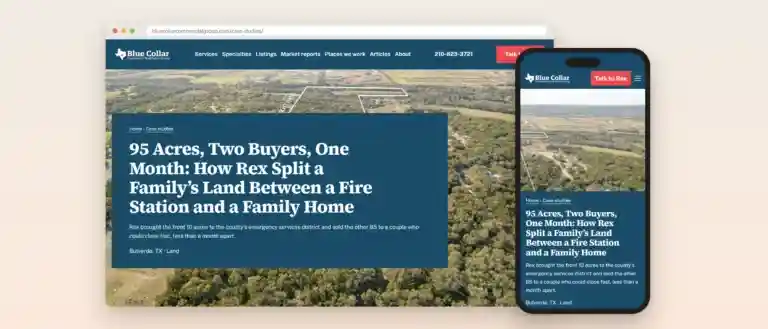
A case study is a short account of a challenge, your approach and the result. It lets the reader examine a contribution rather than accept a broad description of expertise.
State the client role, market and the responsibilities you handled. Make other participants’ contributions clear. Do not imply that a firm’s entire assignment was your individual work.
Show knowledge through a useful issue, not merely the name of the market.
A local account might explain why access needs checking, how an occupier’s operational requirements affect options or what information can change preparation for a sale.
Keep the observation within what you know. A particular assignment does not establish a market-wide conclusion. If the point depends on current conditions, state when it was observed and what still needs confirming.
A market note is a dated explanation of an observation and its practical meaning. It can support a discussion without pretending to replace the organization’s own assessment.
Put the working responsibilities on paper
Tell the client who would communicate, who would gather information and who would perform the relevant work. Confirm the arrangement for the actual engagement.
If another professional must provide an opinion, identify that boundary. If a team member does the property work, say so. A prominent name should not imply personal handling of every task.
A clear account also helps the organization ask sensible questions. Who receives an urgent concern? Who coordinates a missing answer? What information is needed before an opinion can be offered?
Do not fill the gaps with a promise to take care of everything. That phrase sounds generous and explains almost nothing.
Public background can describe your normal approach. The client’s requirements and the agreed engagement determine this assignment’s responsibilities.
Make that distinction visible. It is much easier to discuss before hiring than after an assumption has become an argument.
Fast and unsupported is still unsupported
A useful response identifies what you know and what needs checking.
Say a contact asks whether an office building in Louisville suits a particular operation. You can acknowledge the question, explain what you need to examine and identify who must confirm a use issue. You cannot make the missing information disappear by replying quickly.
Respond with a clear next action. Do not invent a conclusion to look responsive.
An organization can observe this conduct during the selection conversation. You do not need a paragraph promising exceptional communication if your actual response already shows how you handle a question.
Keep any stated response commitment realistic. The calendar you actually work is the calendar the client will experience.
I’ll take a short answer with an honest gap over a polished answer that hides one. Every time. So will a serious client.
Follow the actual request
Ask how the decision will be made and what information is needed.
Some clients have a formal request for proposal, meaning a written invitation to explain how you would handle the assignment. Others may use a less formal comparison. Don’t assume either process from the organization’s size or name.
Follow the stated requirements. If something is unclear, ask a focused question. Keep the public background available, but do not use it as a substitute for answering the request.
Avoid adding material simply to make the package larger. A reader trying to assess an assignment needs the answer in an accessible place.
Help the reader understand what supports an important claim.
A dated account of work can identify the assignment and your role. A relevant public announcement may provide additional context. Where appropriate and permitted, you can discuss references through the client’s process.
Do not invent endorsements or use private material as though public circulation were already authorized. Confirm what can be shared and with whom.
Traceable does not mean exposing every document. It means the reader can distinguish a supported description from a general claim that requires further examination.
AI can summarize the evidence. It cannot make it relevant.
An organization can use a tool to summarize background or explore possible advisors. You should not assume every organization does, or that a summary is the selection process.
In the UpliftCRE CRE AI Visibility Pilot, only 2.5% of identical repeated questions returned the same list of brokers. The Pilot covered 11,721 AI broker recommendations.
If an analyst at the client runs that search, their shortlist depends on the day they asked. Your own pages are the only version of your story that holds still.
Provide clear public pages with the role and work attached. Check any summary against those pages. If it mixes a firm’s work with an individual’s contribution, the correction matters even when the description is flattering.
The human assessment still needs the connection to this assignment. A readable page supplies evidence; a machine’s enthusiasm cannot supply missing relevance.
Build a packet your contact can circulate
Prepare background that can move through an organization without becoming a second project for your contact.
- Write a current introduction. State your role, firm, markets and services. Keep it concise enough that someone unfamiliar with the practice can understand it.
-
Select relevant accounts. Choose work that shows the contribution needed for the type of assignment. Explain the connection rather than rely on the property’s appearance.
-
Clarify responsibilities. Describe who handles communication and the practical work. Identify where client decisions and outside professional help belong.
-
Check the claims and permissions. Confirm dates, roles and supporting material. Remove private information that should not be circulated.
-
Ask an outside reader to assess the packet. Have them explain why the experience might fit and what they still need to know. Revise where your contact would otherwise need to fill the gap.
- Prepare questions about the client’s process. Ask what information is required, who will use it and how you should provide it. Keep those questions focused on the actual assignment.
Store the approved background where you can find and update it. When a new request arrives, select the relevant parts instead of sending the entire collection unchanged.
This makes the record useful in a professional assessment. It does not turn the selection process into something you can control. The point is to give your contact sound material and make the next conversation about the work itself.
Test it with the person who missed the call
Give the approved packet to someone outside your office. Set up a hypothetical request: an organization needs help assessing space for a business operation outside Raleigh.
Ask the reader to explain your relevant role, what experience supports it and what questions remain. Do not present the packet yourself. The whole point is whether it travels.
If they can repeat the career history but cannot connect it to the assignment, edit the selection and the introduction. If they understand the experience but cannot see who would do the work, edit the responsibility explanation.
If they cannot find the answer among the attachments, simplify the arrangement.
Then check the request from the actual client. A request for proposal is a written invitation to explain how you would handle an assignment. Its requirements take priority over your preferred packet.
Keep supporting claims traceable: backed by information a reader can identify and examine. That does not mean sending the private file. It means distinguishing verified descriptions from assertions that need checking.
A good packet respects the reader’s time and the client’s process. Nobody ever won a deal because their attachment was heavier.
Where UpliftCRE fits
At Blue Collar Commercial Group, I want our team’s background to survive being passed to someone who was not in the first conversation. That helped shape UpliftCRE.
UpliftCRE provides a commercial real estate website built so prospects and AI can read it, plus an AI marketing staff that writes with you in ten-minute meetings. You explain the relevant assignment, your role and the evidence. You review each page you create before it publishes. On the Growth and Authority plans, Market Voice also publishes articles about your local market for you each week.
Those pages give you material to select and share. They do not replace an institutional client’s request or agreed responsibilities. You still answer the actual assignment; we help keep the account of your practice clear.
Frequently asked questions
Do institutional clients all use the same process?
No. Ask how the particular client assesses advisors and what information it requires.
What should I send after an introduction?
Send clear background and relevant accounts of work. Make them understandable to colleagues who were not in the conversation.
Should I include the whole track record?
Keep the full record available, but select material relevant to the assignment. Explain why the selected work matters.
What does responsiveness mean here?
Answer what you know and identify what requires checking. A quick unsupported opinion is not the same thing as a useful response.
What is a request for proposal?
It is a written invitation to explain how you would handle an assignment. Follow the client’s actual requirements rather than assume a standard process.
Can public pages replace an assignment response?
They can support it. You still need to answer the client’s specific questions and confirm the responsibilities involved.
Glossary terms used in this article
- Institutional client: An organization making property decisions through its own responsibilities and procedures.
- Case study: A short account of a challenge, approach and result.
- Market note: A dated explanation of a local observation and its relevance.
- Engagement: The agreed work and responsibilities in a client relationship.
- Request for proposal: A written invitation to explain how you would handle an assignment.
- Traceable: Supported by information a reader can identify and examine.
Sources: UpliftCRE CRE AI Visibility Pilot, 11,721 AI broker recommendations.