

TL;DR
- Your letter isn’t the pitch. It’s the trailer. The lookup that follows is the movie.
- The page has to answer the question the letter asked. Not your bio. The question.
- Owners keep letters in drawers for years. The link on it better still work.
- Test the QR code from the paper, not the screen. And print a real web address next to it.
- “Did you get my letter?” is not a follow-up. Ask about their building.
The letter is ready. The address at the bottom isn’t.
You sign a letter to an owner in Louisville. Before sealing the envelope, you type the printed website address into your phone.
The letter raises a useful question about preparing commercial property. The page opens with your biography and never answers it.
You checked the letter. You forgot to check its next step.
Direct mail is not finished when the envelope goes out.
People keep telling me direct mail is dead. It’s not. Owners still open letters about their own buildings. What’s dead is the letter that sends them to a website with nothing to say.
At Blue Collar Commercial Group, we treat the letter and the page as one piece. The letter earns the lookup. The page earns the call.
Paper can start the conversation. It cannot carry the whole practice.
Give the letter a question worth checking
Start with a reason that belongs to the recipient, not a paragraph about how pleased you are to introduce yourself.
Say you contact owners of commercial buildings around Louisville about information worth gathering before a sale or lease discussion. Explain the question without pretending to know each owner’s plan.
Then provide background that expands it. A permitted case study can explain how you approached preparation in a completed assignment. A plain page can explain the information that helps start a useful conversation.
The recipient may not want to sell. They may have a tenant decision or a question about another property. Keep the wider practice available on the site.
This is where a focused letter and a broad practice fit together. The letter needs a specific reason. Your professional identity does not need to shrink to that reason.
Do not rely on the website to repair a weak introduction. If you cannot say why this person might reasonably consider the question, fix the letter first.
Make the account behind the letter easy to find.
If you mention helping owners prepare for marketing, provide background that explains that work. If you refer to local experience, use a page that supports the account accurately.
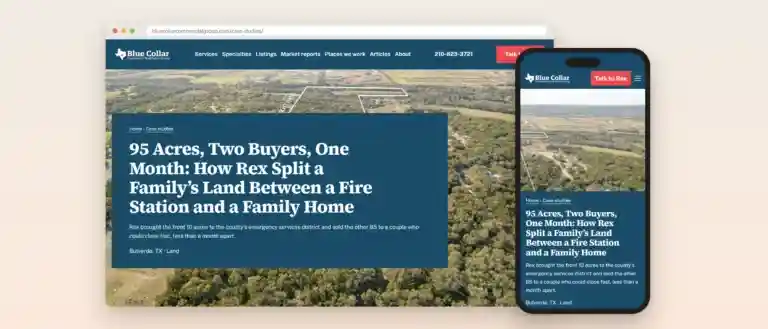
A case study is a short description of a challenge, your approach and the result. It can show a contribution without a deal value or a dramatic promise.
Check your role and the timing. A team assignment should not become an individual achievement merely because the letter has limited space.
Choose the destination before printing the address
Decide where the reader should land.
The home page may be appropriate for a general introduction. A specific account may be better when the letter raises a particular issue.
A page address is the exact location of a page on the web. Choose an address that is understandable and manageable for someone who types it from paper.
Don’t make the destination carry unrelated promotions before the promised explanation. The reader followed a link for a reason. Give them that material first.
A QR code is a printed square that a phone can scan to open a link. It can be convenient, but it should not be the only route.
Include a readable website address and clear contact details. A recipient may prefer to type the address, search your name or call directly.
Test the code from the printed piece, not only the digital file. Check that it opens the intended page and that the explanation is readable on a phone.
If another service controls the code’s destination, understand what happens if you stop using that service. The route should remain under a clear arrangement.
Paper creates an obligation to maintain the destination
A person can save a letter in a drawer. You cannot edit the paper when the site changes.
So choose a page address, the exact location of a web page, that has a continuing job. Keep it useful after the immediate mailing.
If the letter mentions a completed assignment, the account should remain clearly completed. If it mentions a dated local observation, keep the date visible. Do not let an old letter lead to a present-tense claim that is no longer accurate.
When a page moves, a redirect can send visitors from the old address to the relevant new page. Ask the website manager to set it up and test it.
Do not send every old address to an unrelated promotion and call the link fixed. The reader followed a specific promise of information.
The printed piece may outlive the campaign. Maintain the route as part of maintaining your public account.
The letter can be focused while the website explains your range.
An owner arriving through a local question may also want help with another property or a different decision. Give them routes to your services and completed work.
Describe the work you handle directly and situations where an appropriate introduction makes sense. Breadth should be accurate rather than a claim that you can do everything.
This lets the immediate page remain relevant without making it the entire account of the business.
The owner can search your name instead
A recipient can type the address, search your name or ask an AI tool about the practice. Give those routes the same accurate identity.
Real estate has the lowest AI-Overview trigger rate of any tracked industry: 0.14% (Haute Residence x 5WPR, April 2026). An AI Overview is the written summary Google sometimes shows in search results.
Google’s AI answers barely touch real estate yet. That’s the opening. Get your record built before they do.
Start with the person who has the letter and your name. Can they establish the current firm, role, services and relevant work? Then consider the wider possibility of AI referrals.
Do not print an assurance about what a tool will say. A readable public page gives it something to find. The tool chooses its own answer.
The letter should introduce your work, not make the machine responsible for your sales pitch.
The follow-up belongs to the subject
Ask about the property question, not whether the owner finished your letter.
Say the letter discussed information needed before marketing an office building. The next conversation can explore the owner’s decision and whether that preparation question applies. Listen before assigning a course of action.
Buying a stamp doesn’t mean the owner owes you a call.
The account can support the conversation. It cannot tell you the owner’s plans. If the person has a different need, qualify that need and explain what you can handle or refer.
Keep feedback in your notes: what someone actually found useful, what confused them and whether a link failed. Those observations can guide a correction.
And ignore anyone selling you a magic response rate. Your own notes will tell you more than their math.
Notice what people actually tell you.
A recipient may mention the letter, ask about the linked account or explain that the timing is not right. Keep those observations in your working notes.
That feedback can help you improve relevance and clarity. It does not establish that a website change caused a callback or that the same message will work for everyone.
If a link is broken, that is a concrete finding. If someone says the page did not answer the promised question, that is useful feedback. Keep the correction tied to what you learned.
Inspect the complete introduction this week
Review a draft letter and its destination as a connected piece of work.
- State the reason for contact. Make sure it rests on a useful question or observation rather than an assumed plan to sell.
-
Choose the supporting page. Confirm that it explains the material promised in the letter. Write the missing account if needed.
-
Compare the claims. Check the role, timing and services across both versions. Keep private details out.
-
Print and test the routes. Type the address, scan any QR code and open the page on a phone. Confirm the contact information works.
-
Plan for later visits. Decide who updates the destination when a property status or current statement changes.
- Prepare a relevant follow-up question. Let the subject of the letter begin the discussion, then listen to the owner’s actual situation.
Keep the approved text and destination together in your notes. That makes it easier to review what a recipient may still be holding after the mailing is complete.
Test it as a recipient
Put the printed letter on a table and leave your laptop alone. Type the address into a phone. If you use a QR code, a printed square the phone scans to open a link, test it from the paper too.
Keep a readable address beside the code. The reader should have a choice, not a technology quiz.
Read the destination without explaining it to yourself. Does it answer the question in the letter? Does the account identify the advisor and the role? Can the recipient find the broader practice and a working contact route?
Ask someone outside the office to try the same exercise. If they hesitate, do not show them where the right page was supposed to be. Fix the route.
Check the letter’s short claims against the fuller account. Team work remains team work. Old work keeps its date. A contribution does not expand because the letter has less room.
Then seal the envelope.
Fix it before you print. A typo on your desk costs nothing. A typo in five hundred mailboxes costs you the campaign.
Where UpliftCRE fits
I built UpliftCRE after working on our team’s own problem at Blue Collar Commercial Group: introductions needed an accurate online account behind them.
UpliftCRE provides a commercial real estate website built so prospects and AI can read it, plus an AI marketing staff that writes with you in ten-minute meetings. You explain the question behind the letter and the work that supports it. You review each page you create before it publishes. On the Growth and Authority plans, Market Voice also publishes articles about your local market for you each week.
That gives the printed address a useful destination and helps maintain the account over time. You can connect mail to your own record without UpliftCRE. The destination still needs to do its part.
Frequently asked questions
Is this a claim that direct mail has a particular response rate?
No. It explains how to connect the letter with useful background. Results depend on the actual work and recipient.
Must the link go to my home page?
Use the destination that supports the letter’s purpose. A specific account may be more useful than a general introduction.
Should I use a QR code?
It can be a convenient option. Include a readable address and contact details too.
What happens if the page moves?
Ask for a relevant redirect and test it. A printed address may remain in circulation after the website changes.
What should the follow-up call discuss?
Discuss the subject that made the letter relevant. Let the owner’s actual circumstances guide the conversation.
Glossary terms used in this article
- Direct mail: A physical letter or other printed piece sent to a recipient.
- Case study: An account of a challenge, approach and result.
- Page address: The exact location of a web page.
- QR code: A printed square that a phone can scan to open a link.
- Redirect: An instruction sending an old page address to another page.
Sources: Haute Residence x 5WPR, April 2026.