

TL;DR
- Ignoring AI doesn’t stop your clients from using it. They’ll show up with a ChatGPT summary either way.
- AI writes fast. It doesn’t know your deals. You supply the facts.
- “The AI said it” is not a defense. If you send it, you own it.
- AI can’t hear what the owner didn’t say. Listening is still your job.
- Give AI a job, not a hobby. One task you can check beats an afternoon testing apps.
The owner arrives with a summary
You sit down with an owner in Kansas City. Before you open your notes, the owner puts an AI-written summary on the table.
It describes the property question. It also describes your practice. Some of it is useful. One statement about your role is wrong.
Now the meeting starts with an account you did not write.
Refusing to use AI doesn’t protect your job. It just means you show up less prepared than your client.
The owner already did the research. Ignoring the tool doesn’t fix the wrong fact in their summary. It doesn’t make their question go away.
Here’s the line I draw in our marketing and tech work at Blue Collar Commercial Group: AI does the grunt work. Humans do the judgment. Mix those up in either direction and you get burned.
You can change how a draft begins without changing who has to stand behind the finished account.
What changes: research and the first draft
Ask what the prospect has already read. Examine it rather than dismissing the person for bringing it.
The summary may have given the owner words for a concern. It may also have created assumptions that do not fit the property. Find the actual question before arguing with the answer.
In a February 2026 RPR survey of 225 agents, 92% said they use AI or plan to. Nine out of ten. This isn’t coming. It’s here.
For your own practice, give a tool a task you can check. Organize approved assignment facts into a draft. Help arrange questions before writing a market note. Compare the resulting account with what you supplied.
That changes the effort of beginning. It does not make missing facts appear.
A tool that produces a polished paragraph is useful only if the paragraph explains something true. Judge the help by the work you finish, not by how quickly it fills the screen.
AI can help turn an explanation into a first draft.
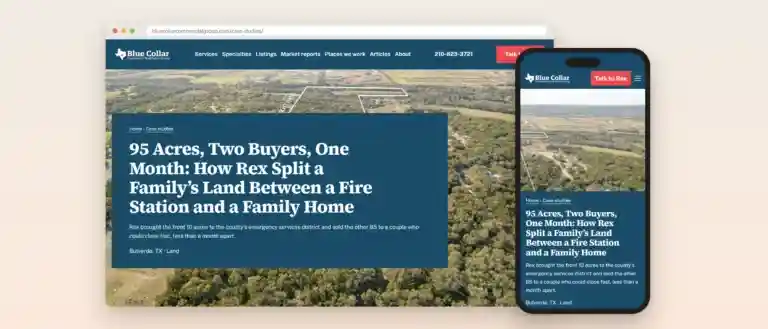
You can describe a completed assignment in ordinary language. A writing assistant can organize the challenge, your approach and the result into a case study.
That is different from asking it to invent a story of professional success. The draft needs actual facts, a clear role and permission to share the material.
You still decide what the account should explain. You still check whether the words match the file and the way you work.
An AI tool can help organize questions, summarize supplied material or produce a starting outline. Use that help where you can check the output.
You might ask for a list of questions to discuss before writing a market note. You might ask it to separate a rough account into the client problem, your actions and the outcome.
Keep confidential information out unless you have assessed and authorized the arrangement for handling it. A convenient tool is not automatically an appropriate home for client files.
Also check for omissions. A summary may sound clear while leaving out the point that changes the decision.
What stays: listening, responsibility and follow-through
The client still needs you to understand the decision.
Say a tenant wants space in a preferred part of Charlotte. A tidy list of options cannot tell you whether that preference is more important than loading access, staffing or the move schedule. You need to ask and understand the answer.
A property owner can describe a sale while actually worrying about family agreement or an operating business. Those concerns may not fit the first outline.
AI can suggest questions. It cannot relieve you of noticing which answer needs another question.
The same is true of responsibility. If you share a statement, you need to check its facts and its relevance to the client. AI-generated means produced with help from a tool. It does not mean exempt from your normal standard.
Lawyers, engineers and lenders still have their own work. Your role does not expand because a draft confidently crosses the boundary.
The client is relying on the account you choose to present. Keep the person doing that choosing in the process.
A polished answer needs the same scrutiny as any other working information.
Check the facts, the source and the connection to the property. Separate an observation from a conclusion. Identify where a lawyer, engineer, lender or another professional is needed.
Do not let the phrase AI-generated become an excuse for an incorrect statement you choose to share. The client is relying on the account you present and the role you agreed to perform.
If a claim cannot be checked, hold it back or label the uncertainty clearly. Confidence in the wording does not resolve uncertainty in the evidence.
The work still involves commitments, coordination and attention.
A useful draft does not return a client’s call. A summary does not confirm that the right person has received a document. A suggested next step does not tell you whether the parties understand it.
You may use tools to help organize those tasks, but the responsibility for the working process remains with the people doing it.
The same applies to disagreement. A client may need help understanding trade-offs, not a more polished version of the option they already prefer.
Use the help to explain the whole practice
Use writing help to describe the actual breadth of your commercial practice.
You can explain owner work, occupier work, acquisitions and appropriate referrals. A broader record lets a prospect understand the range without requiring you to claim expertise in every situation.
Give each account a clear purpose. A market note explains a dated observation. A case study explains an assignment. A service page explains the help you provide.
An AI tool may find those pages when someone researches you. Readable writing gives it material to use, while the tool still controls the answer.
Put a job beside the tool
An afternoon spent comparing apps can look productive while the useful work remains untouched.
Choose a bounded task, a piece of work with a clear purpose and limits. Decide what should go in, what should come out and how you will check it.
Then try it.
If the tool invents facts or takes more correction than it saves, change the task or stop using it for that job. Taking AI seriously does not mean adopting every feature.
Our team needs marketing that fits a real work week. A tool should help finish something true, not become the office’s new hobby.
Keep the relationship work on the calendar too. Drafting help does not make a client conversation less necessary. It should give you clearer material for that conversation.
Try a task you can verify this week
Test a bounded task for writing using information you are comfortable supplying and able to verify.
- Choose a useful account. Start with completed work or a client question that belongs in the public record. Check that the material can be shared.
-
Explain it in your own words. Record a voice note or write rough notes about the situation, your role, the approach and the outcome. Include uncertainty rather than smooth it away.
-
Ask for a draft with limits. Tell the writing tool to use only your facts, avoid invented examples and mark questions it cannot resolve.
-
Review against the source material. Check each important claim. Look for missing context, overstated responsibility and a result presented as a promise.
-
Read the draft aloud. Make sure it sounds like something you would say in a client meeting. Replace language that hides the meaning.
- Decide whether the help was useful. Save the approved account or keep it private pending permission. Note what the tool handled well and what still required your judgment.
Use the same discipline when a prospect brings an AI summary to a meeting. Ask about the concern, inspect the facts and explain what needs checking.
That is a manageable way to adapt. You keep the working strengths of the practice while testing help on tasks with a clear purpose and an accountable human review.
A Tuesday example
Say you return from a conversation with an owner about a mixed-use commercial building outside Milwaukee. This is a hypothetical example, not an account of our team’s work.
Your private notes identify the owner’s decision, the information still needed and the next agreed action. Your public writing should not expose those notes.
Instead, choose a general preparation question from the conversation. Explain it in a voice note without private facts. Ask a writing tool to organize that explanation into a draft and flag anything it cannot establish.
Now review the draft. Does it treat a possible issue as a fact? Does it make your role sound broader than it is? Does it turn a preparation question into advice about an individual building?
Correct those things before sharing.
The tool helped with arranging words. You supplied the knowledge, removed unsupported claims and decided what belonged in public.
Next, make the actual client follow-up. Confirm the information needed and the next action. That work was not done by producing the article.
The distinction is practical. A useful draft and a completed client commitment are different entries on Tuesday’s task list. Keep both entries.
That is what adaptation looks like without turning your practice into a technology demonstration.
Where UpliftCRE fits
I built UpliftCRE because our own team at Blue Collar Commercial Group needed help getting its working knowledge into a public record. The knowledge and responsibility stayed with the people doing the work.
UpliftCRE pairs a commercial real estate website built so prospects and AI can read it with an AI marketing staff that writes with you in ten-minute meetings. You explain the actual assignment or client question. You review each page you create before it publishes. On the Growth and Authority plans, Market Voice also publishes articles about your local market for you each week.
It changes how you get from knowledge to a draft and gives the approved writing a home. It leaves the client judgment, relationships and responsibility for the account with you.
Frequently asked questions
Will AI replace my client relationships?
AI can help with research and drafts. Your clients still need someone to understand their circumstances, check facts and handle commitments.
What is a good first AI task?
Choose something bounded that you can check. A draft based on approved assignment facts is easier to assess than an open-ended request for advice.
Can I publish an AI draft without review?
Review it first. Check facts, permissions, your role and whether the language matches the actual work.
How should I respond to a prospect’s AI research?
Ask what matters to them and examine the source behind important claims. Correct the facts without dismissing the concern.
Should I supply private client files to a tool?
Only after assessing and authorizing the arrangement for that information. Convenience alone does not establish that it is appropriate.
How do I know whether a tool helped?
Look at whether you completed useful work you could verify. Note the corrections and effort required rather than judge by how polished the first answer sounded.
Glossary terms used in this article
- AI-generated: Produced with help from an artificial intelligence tool.
- Case study: An account of a challenge, approach and result.
- Market note: A dated explanation of a market observation.
- Bounded task: A piece of work with a clear purpose and limits.
- Public record: Information about the practice that other people can read.
- Follow-through: Completing the commitments and practical steps involved in the work.
Sources: RPR, February 2026.